
What Is Psoriasis?
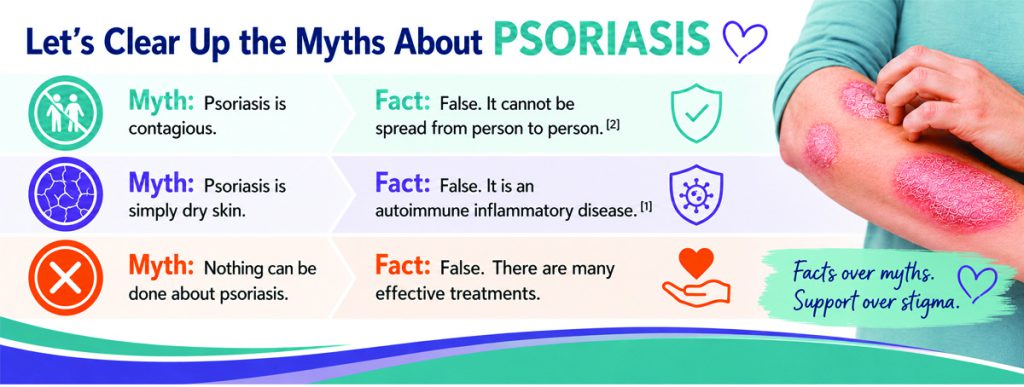
Psoriasis is a chronic autoimmune disease that causes skin cells to grow much faster than normal. Instead of replacing skin cells over about a month, the body produces new cells in just a few days. The excess cells build up on the skin’s surface, forming red, inflamed patches covered with silvery-white scales.[1] Psoriasis is not contagious. You cannot catch it through touching, sharing towels, or other close contact.[2] Approximately 2–3% of people worldwide have psoriasis, and it can occur at any age, although it most often begins between ages 15 and 35.[3]
What Causes Psoriasis?
Psoriasis develops when the immune system mistakenly attacks healthy skin cells. It is thought to result from a combination of:
- Genetics
- An overactive immune system
- Environmental triggers[1,4]
Common triggers include:
- Emotional stress
- Skin injuries or sunburn
- Certain medications
- Infections, such as strep throat
- Smoking
- Heavy alcohol use
- Cold, dry weather[1,4]
Common Symptoms
Symptoms vary but may include:
- Thick, raised red patches with silvery scales
- Dry, cracked skin that may bleed
- Itching or burning
- Thickened or pitted fingernails and toenails
- Scalp scaling similar to severe dandruff[2]
Many people experience flare-ups followed by periods when symptoms improve.
Types of Psoriasis
The most common form is plaque psoriasis, accounting for about 80–90% of cases.[1]
Other forms include:
- Guttate psoriasis – small, drop-shaped spots
- Inverse psoriasis – affects skin folds
- Pustular psoriasis – causes pus-filled blisters
- Erythrodermic psoriasis – a rare but serious form requiring immediate medical care[1]
More Than a Skin Condition
Psoriasis is a systemic inflammatory disease, meaning it can affect more than the skin.
People with psoriasis have a higher risk of:
- Psoriatic arthritis
- Heart disease
- Type 2 diabetes
- Obesity
- Depression and anxiety[5]
Up to 30% of people with psoriasis develop psoriatic arthritis, which causes joint pain, swelling, and stiffness. Early treatment helps prevent permanent joint damage.[5]
Managing Psoriasis
Although there is no cure, many treatments effectively control symptoms.
Medical Treatment options may include:
- Prescription creams and ointments
- Medicated shampoos
- Light (UV) therapy
- Oral medications
- Injectable biologic medications for moderate to severe disease[1,4]
A healthcare provider can recommend the treatment plan that best fits your condition.
Healthy Habits That Help
- Lifestyle choices can reduce flare-ups and improve skin health.
- Moisturize your skin every day.
- Manage stress through exercise, meditation, or relaxation.
- Avoid smoking and limit alcohol.
- Maintain a healthy weight.
- Protect your skin from injuries and sunburn.[4]
When Should You See a Healthcare Provider?
Talk with your healthcare provider if:
- Symptoms last more than a few weeks.
- Large areas of skin are affected.
- Joint pain or swelling develops.
- Over-the-counter products are not helping.
- Symptoms interfere with daily life.[1]
Seek immediate medical attention if you develop widespread redness, peeling skin, fever, or signs of infection.
Healthy Living Takeaway
Psoriasis is a lifelong autoimmune disease, but it can be managed successfully. Early diagnosis, proper treatment, healthy lifestyle habits, and regular communication with your healthcare provider can help reduce flare-ups, improve skin health, and lower the risk of related health conditions. If you notice persistent scaly skin patches or joint pain, don’t wait—talk with your healthcare provider.
©2026ProgressiveHealth
References
1. Armstrong AW, Read C. Pathophysiology, Clinical Presentation, and Treatment of Psoriasis: A Review. JAMA. 2020;323(19):1945-1960.
2. American Academy of Dermatology Association. Psoriasis: Overview, Symptoms, Causes, and Treatment. https://www.aad.org
3. World Health Organization. Global Report on Psoriasis. Geneva: World Health Organization; 2016.
4. National Institute of Arthritis and Musculoskeletal and Skin Diseases (NIAMS). Psoriasis. https://www.niams.nih.gov
5. National Psoriasis Foundation. Psoriatic Disease and Comorbidities. https://www.psoriasis.org